
Orbital Logistics, Reimagined
Standardized, low-cost cargo delivery between orbits
Our Mission
Build standardized, low-cost orbital cargo logistics using smart infrastructure and passive containers.
The Problem
Absurdly Expensive
Moving cargo between orbits costs $1-5M+ per delivery. Every payload needs its own propulsion, guidance, and power systems.
>>> COST_PER_KG = $10,000+
No Standardization
It's like shipping packages where every box needs its own engine. Custom engineering for every mission.
>>> NO_INTEROPERABILITY
Doesn't Scale
As commercial space stations multiply, current solutions will become the bottleneck. Without standardized transfer vehicles, the industry simply cannot meet growing demand.
>>> BOTTLENECK_DETECTED
Our Solution
Smart endpoints. Dumb containers.
How It Works
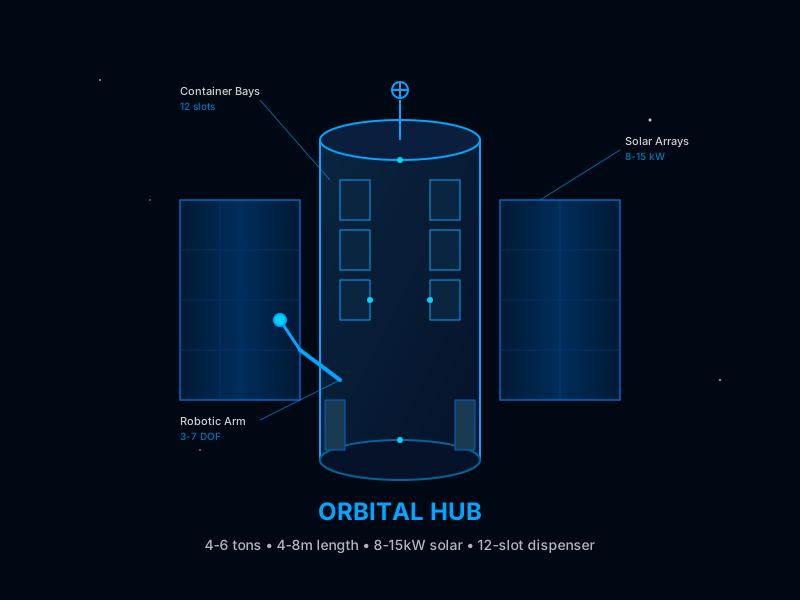
Orbital Hub
Computes release timing, holds containers, precise deployment. All intelligence lives here.
- 4-6 tons • 4-8m length
- 8-15kW solar arrays
- 12-slot dispenser
- Robotic arm deployment
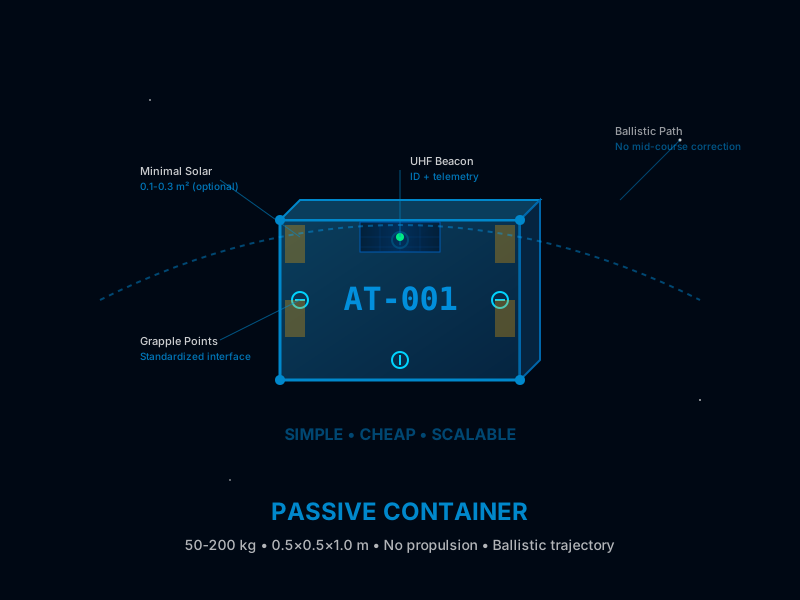
Passive Container
Cheap, standardized, ballistic trajectory. Minimal propulsion needed. Just a box.
- 50-200 kg mass
- 0.5×0.5×1.0 m
- No active guidance
- $10-30K each
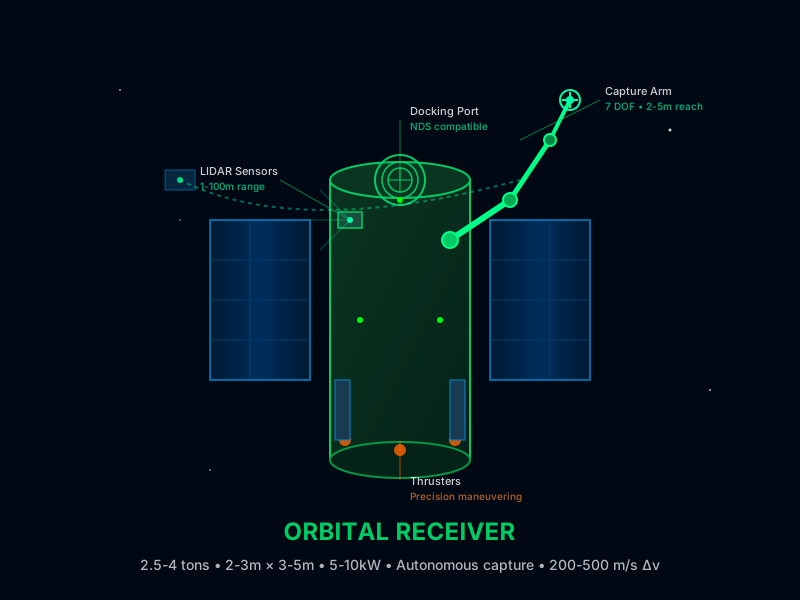
Orbital Receiver
Autonomous capture station at destination. Maneuvers to catch containers.
- 2.5-4 tons • 3-5m length
- 7-DOF capture arm
- LIDAR sensors (1-100m)
- Autonomous rendezvous
Why Now
Rideshare Commoditization
SpaceX made LEO access cheap: $5K/kg → <$1K/kg trajectory
Station Boom
4+ commercial stations launching 2025-2028 (Axiom, Vast, Orbital Reef, Gateway)
Lunar Gateway
NASA needs logistics partners for cislunar operations
Defense Interest
DoD wants contested logistics capability and rapid resupply
5-Year Vision
LEO-to-LEO Demo
Prove passive container capture with demonstration mission
Station Logistics
ISS resupply competition, commercial station contracts
Cislunar Expansion
Gateway resupply, lunar orbit operations
Scale
Orbital depots + defense contracts
Market Opportunity
Let's Talk
Interested in partnering, investing, or learning more?